
TikTok in-feed ads are one of the most misused paid formats in digital advertising right now. Most advertisers copy their Instagram creatives, drop them into TikTok Ads Manager, set a budget, and wonder why nothing converts.
The platform’s audience, scroll behavior, and creative expectations are fundamentally different from every other social channel.
If your ads are getting skipped in the first three seconds, you are losing money that a better creative would have saved.
This article covers what TikTok in-feed ads are, how they work, TikTok in feed ads cost, the exact specs for 2026, how to build campaigns, and what real brands have done to make the format work.
Quick Answer
TikTok in-feed ads are short video placements that appear natively inside TikTok’s For You feed, blending in alongside organic content. They autoplay with sound, support clickable CTA buttons, and can link to external landing pages or TikTok profiles. Costs vary by objective and audience, but most advertisers running standard in-feed placements in the U.S. pay a CPC of around $1.00 and a CPM between $4 and $10, depending on industry, creative quality, and competition level.
What are TikTok In-Feed Ads?
TikTok in-feed ads are paid video placements that appear directly between organic posts in a user’s For You feed. They look and behave like regular TikTok videos, which is the core reason they work when the creative is right.
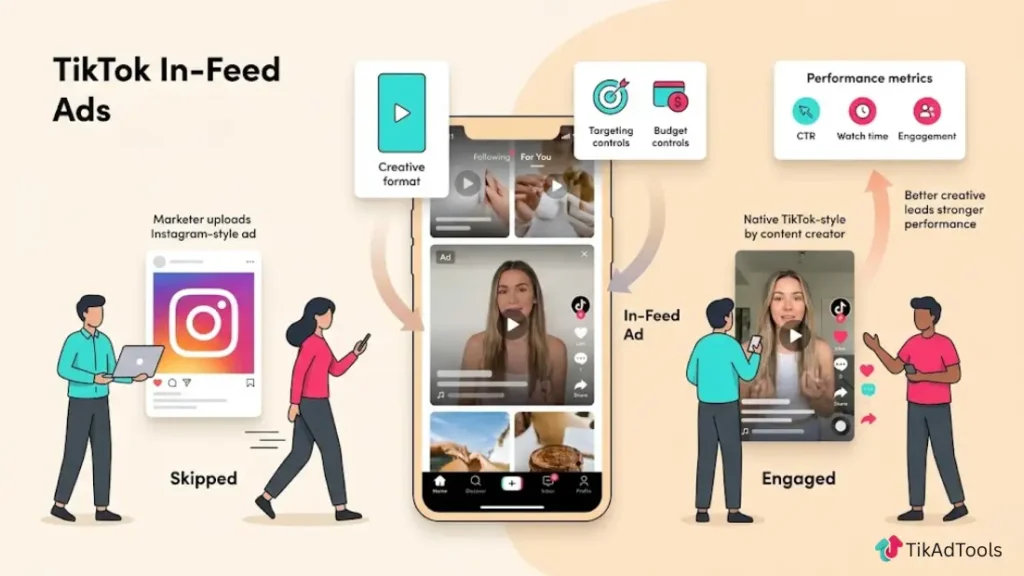
Unlike banner ads or interstitials, these ads compete directly with content for attention and earn or lose views on those same terms.
You can attach a CTA button, drive traffic to a landing page, or send users to your TikTok profile or product page.
Brands like Gymshark and e.l.f. Cosmetics have used TikTok campaigns to reach tens of millions of users without their content feeling like a traditional paid placement.
How TikTok In-Feed Ads work in the for you feed
When you run a TikTok in-feed ad, the ad autoplays with sound on, just like any other piece of content in the feed. Users can like, comment, share, and engage with the ad the same way they would with an organic post.
The only visible indicators are a small “Sponsored” label at the bottom left and a CTA button on the right side.
If the creative earns attention on its own merits, most users will not stop to check for the label. They stop scrolling because the content pulled them in.
Types of TikTok In-Feed Ads
Some advertisers also compare standard in-feed placements with TikTok Top Feed ads, which receive more prominent visibility when users first open the app. Choosing between these formats depends on your campaign objective, budget, and desired reach.
TikTok offers several in-feed ad formats. Choosing the right one for your goal saves budget and reduces the testing cycle.
- Standard In-Feed Ad: A self-serve video ad created through TikTok Ads Manager. Best for direct response and awareness campaigns.
- Spark Ads: You boost an existing organic TikTok post, either your own or a creator’s, with permission. The post keeps all existing likes, comments, and shares intact.
- Video Shopping Ads: Built for eCommerce. These pull product data from your TikTok Shop catalog and display shoppable product cards directly in the feed.
- Carousel Ads: Available in select markets, these let you display multiple images in a single in-feed placement.
Spark Ads consistently outperform standard in-feed formats on engagement. According to the TikTok for Business blog, Spark Ads deliver a 134% higher video completion rate and a 157% higher 6-second view-through rate compared to standard in-feed ads.
TikTok In-Feed ad specs (2026)
If you’re also evaluating TikTok Top Feed specs, you’ll notice many of the recommended video dimensions and aspect ratios overlap with standard in-feed placements. However, eligibility, placement behavior, and buying options differ between the two formats.
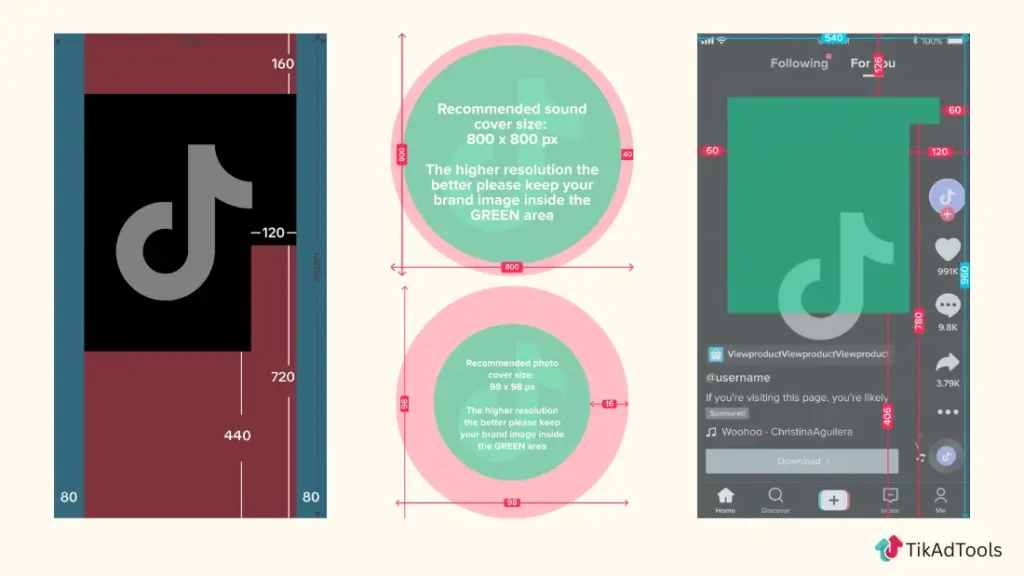
Getting the TikTok in-feed video ad specs right is not optional. If your video does not meet TikTok’s technical requirements, the ad will either be rejected or compressed in ways that visibly damage quality.
| Spec | Requirement |
|---|---|
| Video length | 5 to 60 seconds (9 to 15 seconds recommended) |
| Aspect ratio | 9:16, 1:1, or 16:9 |
| Resolution | Minimum 540 x 960px for 9:16 |
| File format | MP4, MOV, AVI, GIF |
| File size | Maximum 500MB |
| Bitrate | 516 kbps or higher |
| Caption length | Up to 2,200 characters |
| CTA options | Multiple options, including “Shop Now,” “Learn More,” and “Sign Up” |
The standard TikTok ad dimensions for in-feed placements are 1080 x 1920 pixels in 9:16 format. That vertical layout fills the entire mobile screen and consistently outperforms landscape formats in the feed.
Your visible ad description is limited to around 100 characters in the feed view. Front-load your key message because most users will not tap to expand the caption.
How much do TikTok In-Feed Ads cost?
TikTok in-feed ads run on an auction-based pricing model. You set your budget, choose a bid strategy, and TikTok enters your ad into real-time auctions against other advertisers targeting the same audience.
According to TikTok Ads Manager, the minimum campaign budget is $50 per day, and ad group minimums start at $20 per day. Costs vary significantly based on objective, audience size, and creative performance.
According to WebFX’s TikTok Marketing Benchmarks, TikTok ads average a CPM of $9.16 and a CPC of around $1.00, making it one of the more cost-efficient platforms for reach and engagement. The platform benchmark CTR sits at 0.84% across industries.
TikTok in feed ads cost typically falls between $4 and $10 CPM and $0.17 to $1.50 CPC, depending on format, objective, audience, and targeting. Fashion and beauty categories cost more due to high advertiser competition. B2B niches can push CPMs considerably higher.
What affects your TikTok In-Feed ad cost?
Several factors directly move your cost per result.
- Bid strategy: Cost Cap and Bid Cap give you price control, but can limit delivery volume. Lowest Cost maximizes spend efficiency but removes predictability.
- Audience size: Narrow targeting raises CPMs. Broader audiences lower CPMs but reduce precision.
- Creative quality: TikTok rewards high-engagement ads with lower effective costs. A strong video gets shown more without a proportional increase in spend.
- Seasonality: CPMs spike sharply during Q4 and major sale periods as advertiser competition intensifies.
- Campaign objective: Conversion campaigns cost more than awareness campaigns because TikTok is optimizing for a harder downstream action.
How to create TikTok In-Feed Ads (step by step)
You can create in-feed ads with the TikTok Ads Manager in under 30 minutes once your creative is ready.
1. Go to TikTok Ads Manager at ads.tiktok.com and log in to your business account.
2. Click “Create Campaign” and select your objective: awareness, consideration, or conversion.

3. Set your campaign budget at the campaign level using either daily or total spend limits.
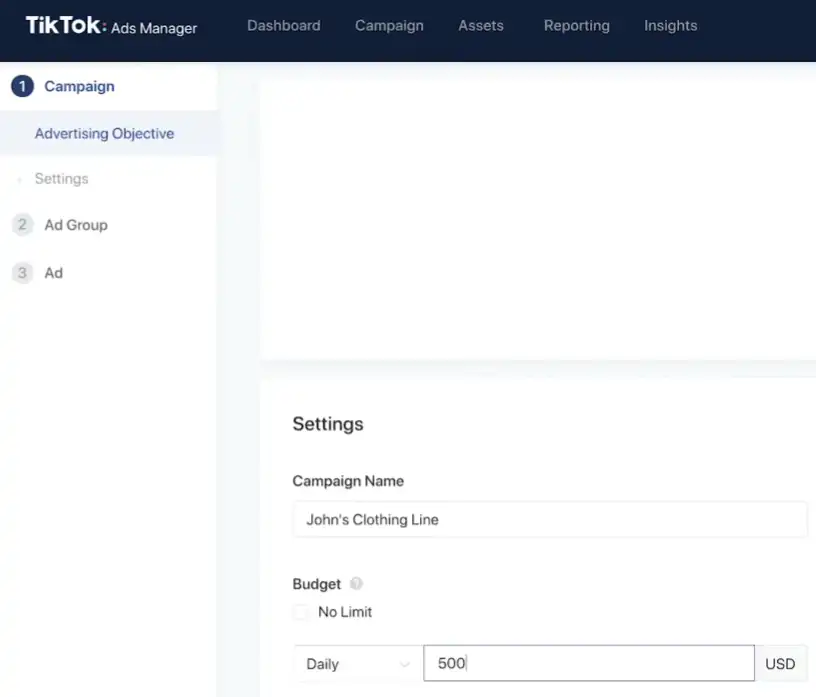
4. Create your ad group. This is where you control placements, audience targeting, and bidding.
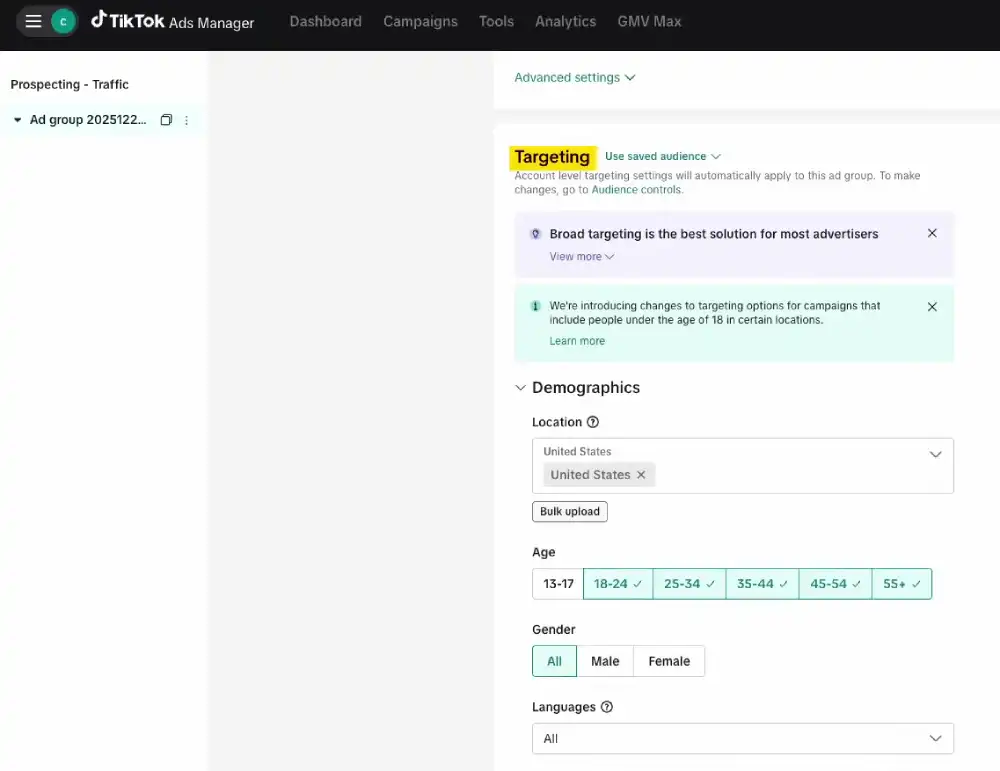
5. Select placements. Choose “TikTok” specifically if you want your ad to run only in the For You feed. Automatic placement will distribute across TikTok’s broader network.
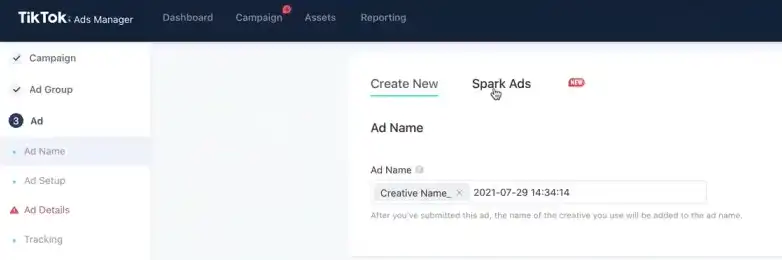
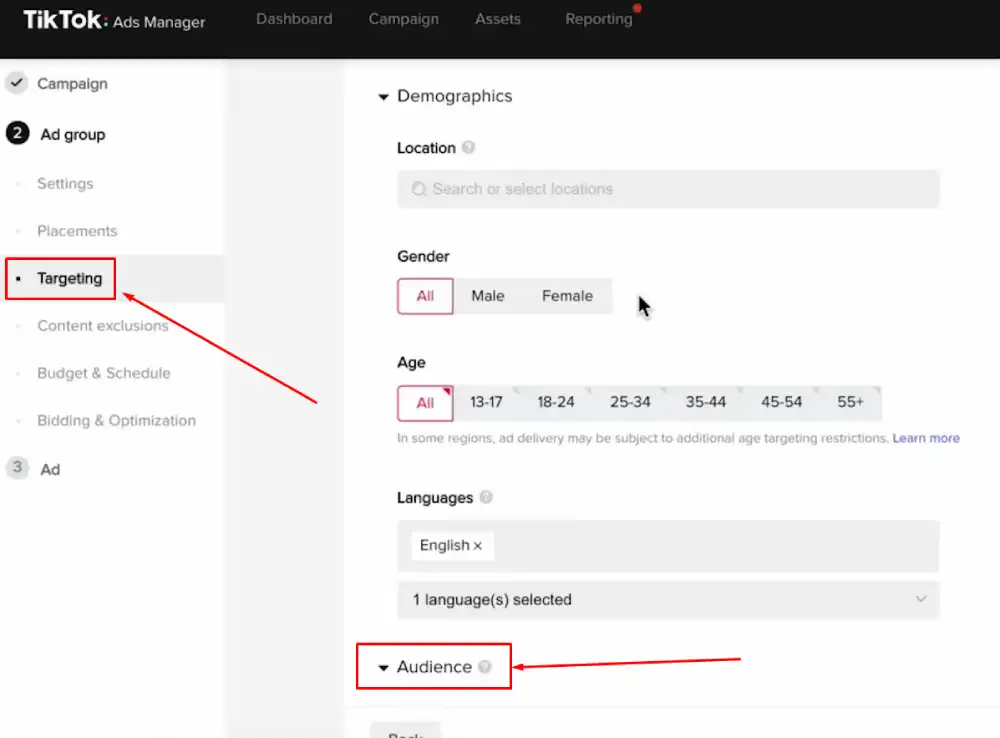
6. Define your audience. Set demographics, interests, behaviors, and any custom or lookalike audiences.
7. Upload your creative. Add your video, write your caption, and select the appropriate CTA button.
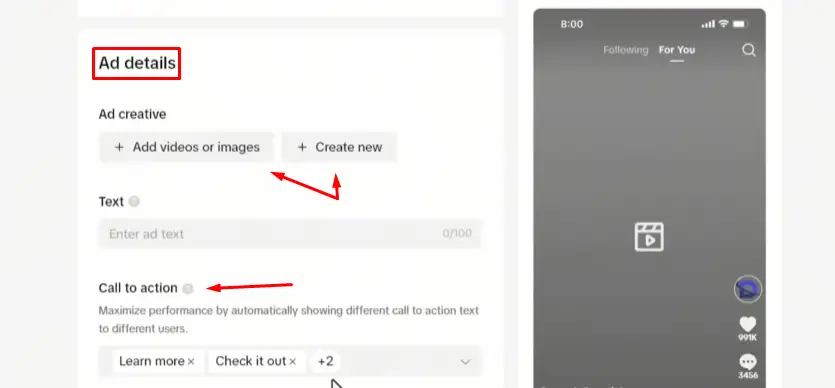
8. Add your destination URL or TikTok product/profile link.
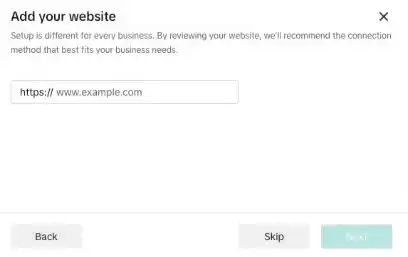
9. Review and submit. TikTok’s approval process typically takes up to 24 hours.

Monitor performance closely for the first 72 hours after launch. The algorithm’s learning phase runs hardest in this window, and small adjustments early on can have an outsized impact on final results.
TikTok In-Feed ad targeting options
TikTok Ads Manager gives you multiple targeting layers to reach the right users inside the feed.
- Demographics: Age, gender, location, and language
- Interests: Based on the type of content users actively engage with
- Behaviors: Actions like video interactions, creator follows, and hashtag engagement
- Custom Audiences: Upload customer lists, retarget website visitors via TikTok Pixel, or retarget past ad engagers
- Lookalike Audiences: Reach new users who behave similarly to your existing customers
- Contextual Targeting: Target based on video keywords and hashtags tied to specific content categories
Lookalike audiences built from high-value customer lists tend to outperform interest-based targeting in direct-response campaigns. If you have first-party customer data, start there before testing broad interest targeting.
TikTok In-Feed ad creative best practices for 2026
Your creative is what makes or breaks a TikTok in-feed campaign. Targeting and budget structure amplify whatever the creative already does. If the video does not work on its own, nothing else makes up for it.
- Hook in the first 3 seconds. According to Asia Research Media, 71% of users decide whether to keep watching within the first three seconds.
- Shoot vertically in 9:16. Horizontal video in a vertical feed signals low effort and wastes screen real estate.
- Use native-style editing. Text overlays, trending sounds, and fast cuts outperform polished ad aesthetics on this platform consistently.
- Show the product in action. Static product images underperform. Show real use cases, real reactions, or visible results.
- Add captions. A meaningful portion of users watch without sound in public settings. Captions keep them engaged.
- Test 3 to 5 creative variations per ad group. Let performance data pick the winner rather than gut instinct.
TikTok In-Feed ad examples that actually work
Real TikTok in-feed ad examples show what “native” looks like in practice, not just in theory.
e.l.f. Cosmetics ran a branded hashtag challenge using an original song built specifically for TikTok, supported by in-feed ads to drive reach. According to The One Club, the #eyeslipsface campaign attracted over 3.5 million user-generated videos, totaling over 5 billion views, and became the most viral U.S. campaign in TikTok history at the time. The content looked and felt organic. Users participated because it was genuinely entertaining.
The Snax Lab, a small eCommerce snack brand, used Spark Ads to boost proven organic posts as paid in-feed content. According to TikTok’s official case study, Spark Ads tripled their sales once added to the campaign strategy, with their ad group averaging a ROAS of 6x to 8x. Within four months, this led to gross revenue of more than $100,000.
Duolingo’s organic TikTok presence demonstrates the standard your paid in-feed ads should try to meet. Their videos use humor, trending audio, and character-driven storytelling. When you approach in-feed ads with that same intent, the “Sponsored” label stops being a barrier.
The pattern across all three: the content competes for attention on its own terms before the viewer registers it as an ad.
How to measure TikTok In-Feed ad performance
Tracking the right metrics for your campaign objective is what separates confident optimization from guesswork.
| Metric | What It Measures |
|---|---|
| CPM | Cost per 1,000 impressions |
| CPC | Cost per click |
| CTR | Percentage of viewers who clicked |
| Video Completion Rate | Percentage who watched to the end |
| Conversions | Purchases, sign-ups, or target actions |
| ROAS | Revenue generated per dollar of ad spend |
For awareness campaigns, prioritize CPM, reach, and video completion rate. For conversion campaigns, ROAS and cost per acquisition are the metrics that actually matter.
The platform benchmark CTR for TikTok in-feed ads sits at 0.84% according to WebFX’s TikTok Marketing Benchmarks. Consistently outperforming that number is a reliable signal that your hook and targeting are working.
Completion rates above 25% indicate your pacing is holding attention past the opening seconds. Anything sitting below these threshold points to a creative or targeting problem, not a budget problem.
Use TikTok Pixel data alongside Ads Manager reporting. Platform-side attribution tends to overcount conversions. A third-party tool like Northbeam or Triple Whale gives you a more grounded view of actual performance across channels.
Frequently asked questions
What is a TikTok in-feed ad?
A TikTok in-feed ad is a paid video placement that appears natively in a user’s For You feed between organic posts. It autoplays with sound, includes a clickable CTA button, and can link to an external website or TikTok profile.
How much do TikTok In-Feed ads cost?
TikTok in-feed ads require a minimum campaign budget of $50 per day and a minimum ad group budget of $20 per day.
What are the specs for TikTok in-feed ads?
TikTok in-feed ads should use a 9:16 aspect ratio at 1080 x 1920 pixels, run between 5 and 60 seconds, and be uploaded as MP4 or MOV files under 500MB.
Are TikTok in-feed ads worth it for small businesses?
TikTok in-feed ads can work for small businesses, but only if you can produce content that feels native to the platform.
What’s the difference between Spark Ads, TikTok Top Feed, and standard in-feed ads?
Spark Ads boost an existing TikTok post while keeping all accumulated social proof: likes, comments, and shares. Standard in-feed ads start from zero engagement and disappear from public view once your campaign ends.
How long should TikTok in-feed ads be?
TikTok recommends 9 to 15 seconds based on performance data from top campaigns. While the format supports up to 60 seconds, shorter videos see higher completion rates across most objectives.
Conclusion
TikTok in-feed ads give you direct access to one of the most engaged mobile audiences in paid social. Understanding the format, cost structure, specs, and creative requirements is what separates campaigns that perform from those that quietly drain budget.
We covered the full picture: what in-feed ads are, how the For You feed placement works, which format type fits your goal, and how to read performance data accurately.
The real examples from e.l.f. Cosmetics, The Snax Lab, and Duolingo all point to the same conclusion. Content that earns attention on its own terms outperforms content that is paid to be there.
The creative is where TikTok in-feed ads are won or lost. Specs and targeting create the conditions. The video does the actual work. Build content that belongs in the feed first, and your budget will stretch much further.