
Selling electronics on TikTok is harder than selling a $25 impulse product, and most advertisers find that out the expensive way.
The price is higher, the buyer is more careful, and the ad review team is stricter. So the playbook that works for a phone case falls apart the moment you try it on a $300 pair of headphones.
The good news is that electronics have a built-in advantage on TikTok. Tech demos well. A product that does something visible on camera has a head start that a supplement or a candle never gets.
Table of Contents
Get Up to $6,000 in Free TikTok Ad Credits
TikTok offers ad credit incentives for new advertisers, helping you test campaigns with a lower upfront cost.
TL;DR
- Electronics sell on TikTok when the ad shows the product working, not when it lists specs.
- High price means a longer decision, so you need a retargeting layer, not a single cold campaign.
- Electronics get flagged in ad review more often, so claims, batteries, and “refurbished” wording need care before launch.
Quick Answer
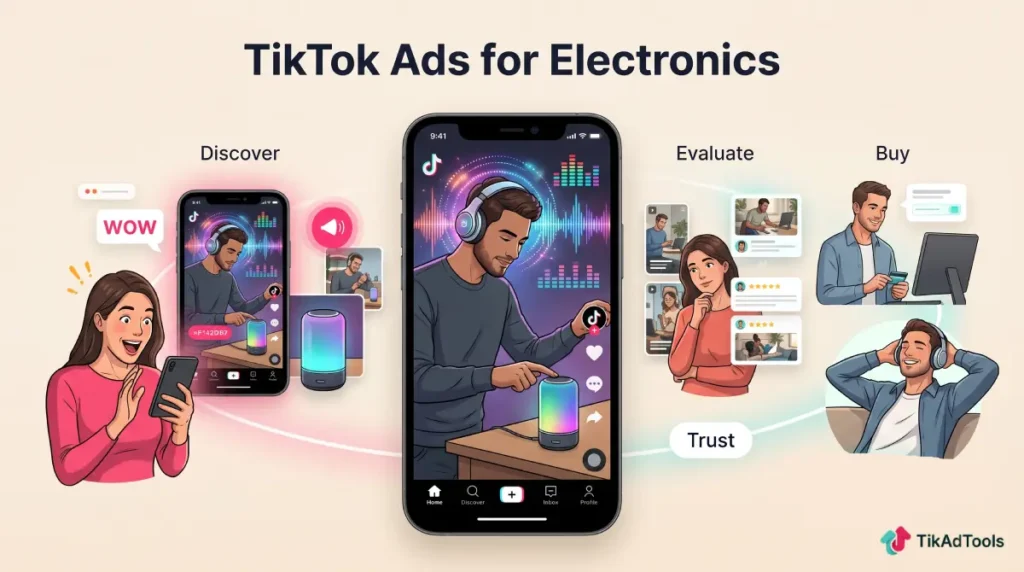
TikTok ads for electronics work best when the creative leads with a live demo and a clear before-and-after moment, not a feature list. Because tech is a considered purchase, split your budget between a cold awareness layer and a warm retargeting layer that handles the comparison shopping. Trust signals like real reviews and on-camera unboxing videos close the gap that price creates.
Why electronics are different from every other product
Price changes everything about how the ad has to work. A buyer scrolling past a $19 product decides in two seconds. A buyer looking at a $250 product wants proof, comparisons, and a reason to trust you first.
That’s why a single cold campaign rarely closes electronics. The first ad earns attention. The buyer then leaves, checks reviews, compares two or three options, and comes back days later. If you’re not running a retargeting layer, you lose most of those returning buyers to whoever shows up next.
Electronics also carry more buyer fear. People worry about defects, fake products, and wasting money on something that breaks. Your creative has to answer that fear directly, not ignore it.
The creative that actually sells tech
Lead with the product doing the thing. The single biggest mistake in electronics ads is opening with a logo or a spec sheet instead of the product working on camera.
Show the noise-canceling headphones cutting out a loud room. Show the camera shooting in the dark. Show the speaker filling a space. A three-second visible demo beats thirty seconds of someone reading the box.
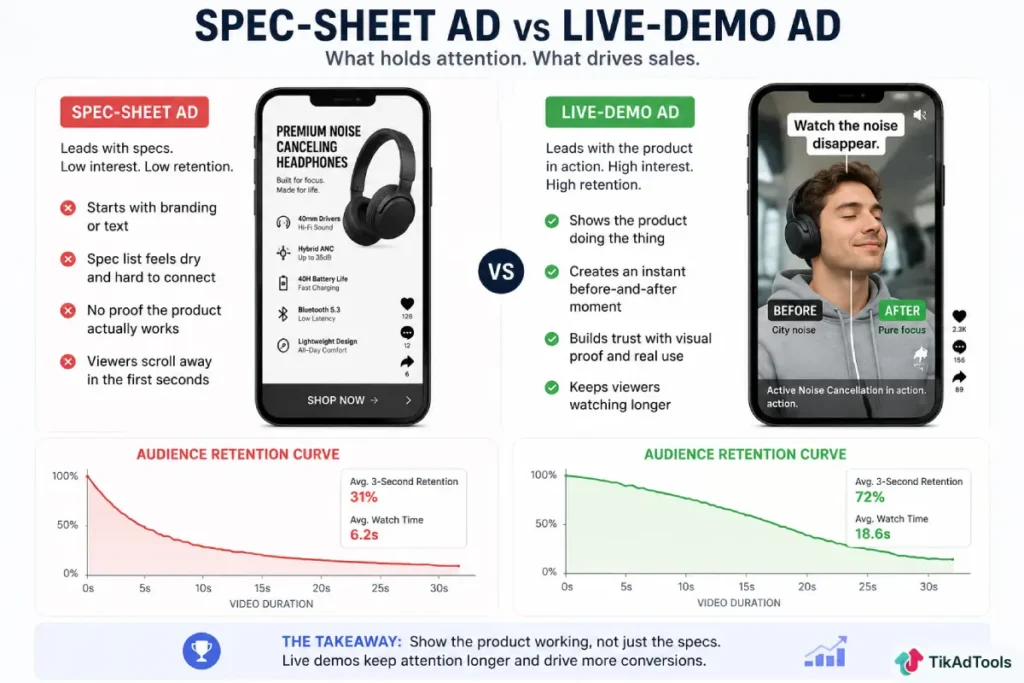
User-generated content matters more here than in almost any other category. A real person unboxing and reacting reads as proof, while a polished studio ad reads as a sales pitch. UGC-style ads lower the trust barrier that price builds up.
If you’re editing demo footage into short native clips, a fast mobile editor like CapCut keeps production cheap enough to test several angles at once.
Structure: stop trying to close cold traffic in one ad
Split the funnel by buyer temperature. Electronics buyers do not convert on first contact, so a flat single-campaign setup fights the way people actually shop.
Run a cold layer aimed at views and engagement to find people who care about the category.
Then run a warm layer to everyone who watched most of the video, visited the page, or added to cart. The warm layer is where the comparison shopper finally buys.
Keep the audiences separate so your data stays clean and your costs make sense. If you merge cold and warm spend, you’ll never know which part of the funnel is actually working. A clear funnel template saves you from guessing later.
How do you get electronics Ads approved on TikTok?
Electronics trip TikTok’s ad review more than most categories, usually over claims and product type. Words like “best in the world,” medical-sounding benefits, or guarantees of results get flagged fast. Stick to what the product does, not what it will do for the buyer’s life.
Certain items carry extra rules. Devices with lithium batteries, surveillance gear, signal jammers, and anything that looks like a weapon accessory face tighter restrictions or outright bans.
Refurbished and used electronics often need clear labeling, and missing that wording gets ads rejected.
Read the current rules before you build the campaign, not after a rejection. TikTok’s own Business Resources Center lists the restricted and prohibited categories, and checking it first saves days of ad approval delays.
The margin math most electronics sellers skip
High ticket does not mean high profit. Electronics often run thin margins, so a “good” ROAS for a $30 product can be a losing number for a $300 one.
Work out your real break-even ROAS before you spend a dollar. Factor in product cost, shipping, returns, and platform fees, then set your target above that line.
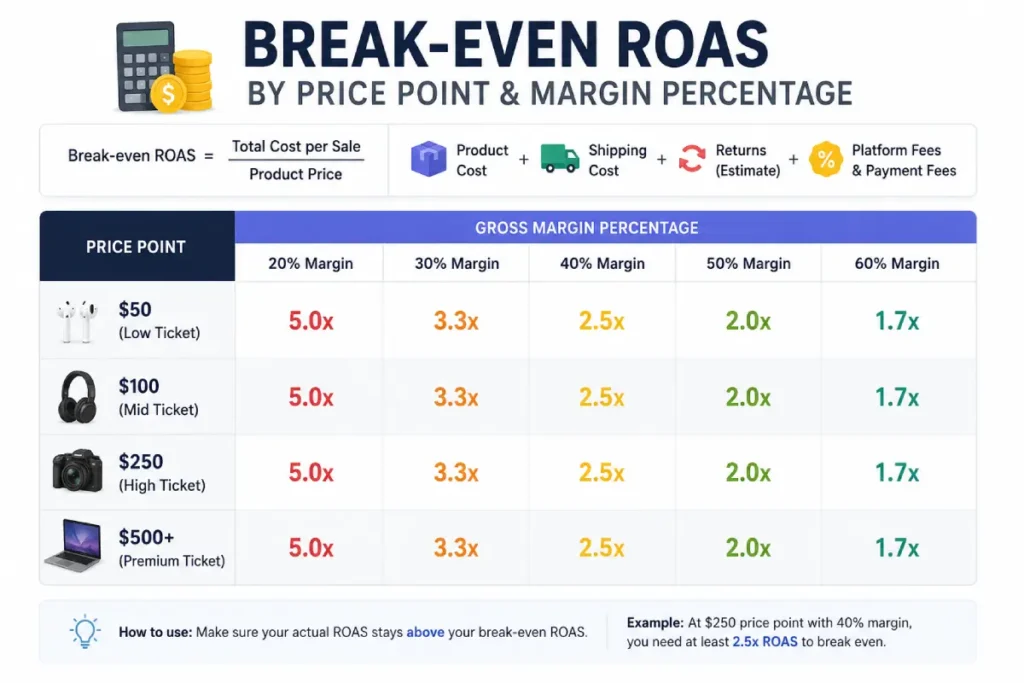
A quick ROAS calculator makes this a two-minute job instead of a spreadsheet headache.
Returns hit electronics harder than other categories too. A buyer who changes their mind on a $12 item rarely bothers, but a $300 return wipes out the profit from several sales.
Build that reality into your target numbers so a campaign that looks profitable on the surface actually is.
Hooks that work for tech buyers
Open with the problem the product solves, in the first second. Tech buyers scroll past anything that sounds like an ad, so the hook has to feel like a real person sharing a real find.
“I stopped buying cheap earbuds after this” works because it names a shared frustration. “Premium audio experience” fails because it sounds like packaging copy. The hook decides whether anyone sees the demo at all.
Question hooks and result hooks both pull well for electronics. “Why is nobody talking about this camera setting?” creates curiosity, while “This cut my charging time in half” leads with a concrete outcome.
Budget and testing for a considered purchase
Give electronics campaigns more time before you judge them. A $20 product can prove itself in two days, but a $250 product needs a week or more because the buying cycle is longer.
Test creative angles, not just audiences. For tech, the winning variable is almost always the demo angle or the hook, so run three to four different opening moments against each other before touching targeting.
If you’re just getting started and want to stretch early spend, TikTok sometimes offers ad credit for new accounts, which you can check through TikTok Ads Manager.
Do not kill a campaign on day-two numbers. Electronics buyers who saw your ad on Monday often buy on Friday, and early data hides that delay.
FAQs
What’s the best ad format for selling electronics on TikTok?
Spark Ads and UGC-style in-feed videos work best because they show the product in real use and look native to the feed. Polished, studio-style ads tend to underperform for tech because they read as commercials rather than recommendations.
How much budget do I need to advertise electronics on TikTok?
Plan for more than you would for a low-cost product, since electronics need a longer testing window and a retargeting layer. A realistic starting point is enough daily spend to gather meaningful data over a full week, not just a day or two.
Why do my electronics ads keep getting rejected?
Most rejections come from claims that sound exaggerated, missing labels on refurbished or used items, or products in restricted categories like surveillance gear and devices with certain batteries. Reviewing TikTok’s restricted product rules before launch prevents most of these.
Do I need influencers to sell electronics on TikTok?
You don’t need big influencers, but you do need content that looks like a real person using the product. Affordable UGC creators or even your own unboxing footage often outperform expensive influencer deals for tech.
How long does it take to see results from electronics ads?
Longer than cheaper products, usually a week or more, because tech is a considered purchase with a comparison-shopping delay. Judging performance after one or two days will make a working campaign look like a failure.
Should I run the same ad to cold and warm audiences?
No, the messaging should differ by stage. Cold audiences need a hook and a demo to earn attention, while warm audiences need trust signals like reviews, guarantees, and comparison points to finish the decision.
Final thoughts
Electronics reward advertisers who treat the sale as a process, not a single click. Show the product working, give the careful buyer a path back, and keep your claims clean so review doesn’t slow you down.