
Most brands running TikTok shopping ads in 2026 are working with outdated information. The manual Video Shopping Ads format was discontinued in July 2025. If your strategy still references that setup process, you are building on a foundation that no longer exists.
That gap is costing sellers real money. You pick the wrong campaign type, the algorithm has nothing to work with, and you blame TikTok for poor results when the actual problem is the setup.
The good news: the new system is more powerful if you understand how it works. TikTok rebuilt its entire shopping ads architecture around one automated format, GMV Max.
Get Up to $6,000 in Free TikTok Ad Credits
TikTok offers ad credit incentives for new advertisers, helping you test campaigns with a lower upfront cost.
Your results now depend on creative volume, product selection, and how well you read the performance data.
This guide covers all of it: how the current ad system works, how to set up and launch correctly, what your creatives need to look like, what everything costs, and how to measure what actually matters.
By the end, you will have a clear, practical framework for running TikTok Video Shopping Ads profitably in 2026.
Table of Contents
What Are TikTok Video Shopping Ads?
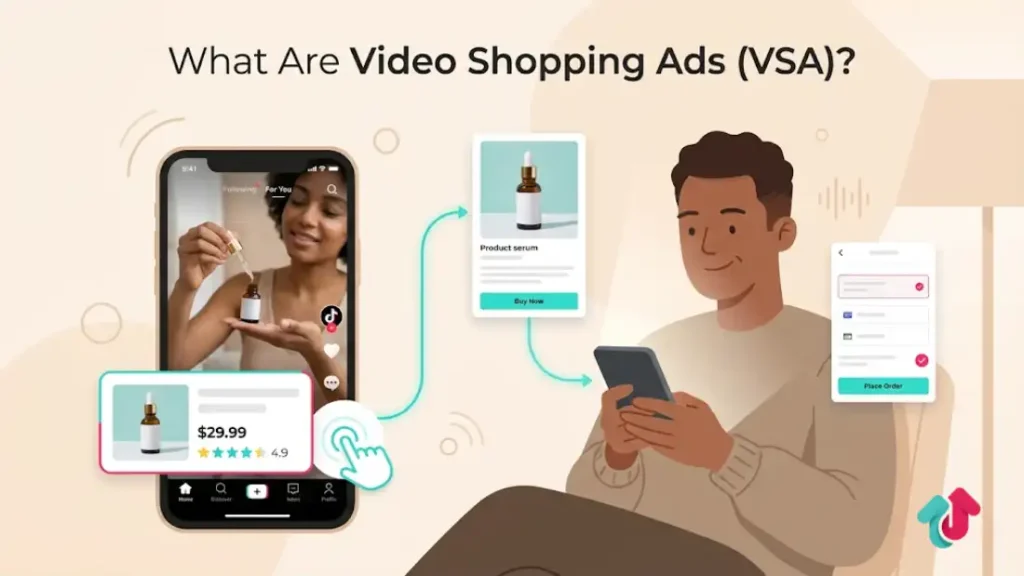
TikTok Video Shopping Ads are in-feed video ads that display shoppable product cards directly inside TikTok, letting viewers browse and purchase without leaving the app. In 2026, these ads run exclusively through GMV Max, TikTok’s automated campaign format that replaced the manual Video Shopping Ads system in July 2025. The system pulls from your organic videos, affiliate creator content, and paid assets simultaneously, then allocates budget to whatever drives the most purchases. Results vary based on your creative volume, product selection, and how competitively you set your ROI target.
How TikTok Video Shopping Ads Work in 2026
The core idea is straightforward: your video plays in someone’s feed, a product card appears below it, they tap, and they buy, all without leaving TikTok. What changed is the infrastructure running that process.
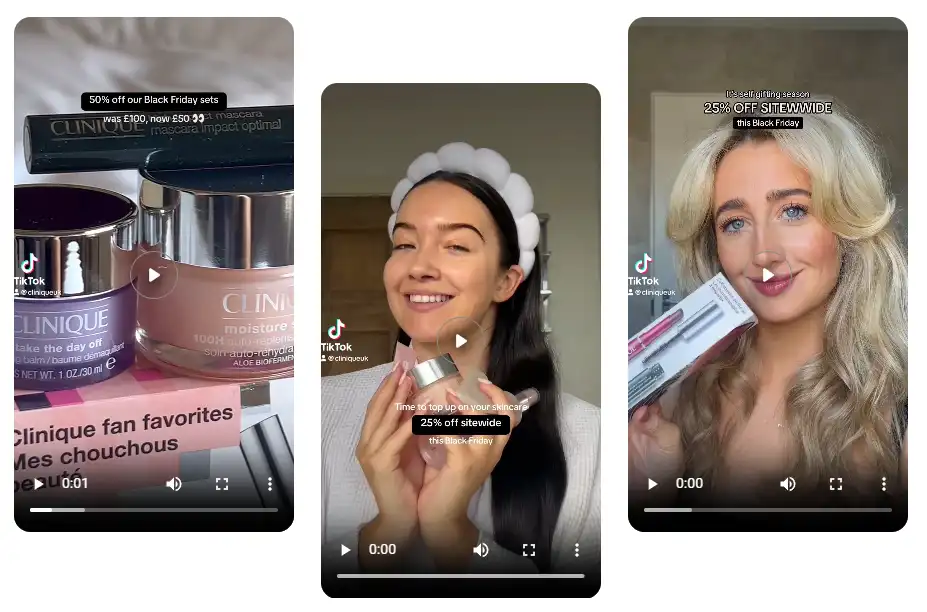
TikTok consolidated its shopping ad formats into a single automated system. Understanding how that system operates is the difference between profitable campaigns and wasted budget.
From the For You Page to Checkout: The In-App Purchase Flow
Here is the full purchase journey a customer takes from your ad to a completed order:
- Your video plays in the For You Page, Shop Tab, Search results, or TikTok Pangle network.
- A product card appears alongside or below the video showing the item name, price, and a buy button.
- The viewer taps the card and enters your TikTok Shop product page without leaving the app.
- They complete checkout inside TikTok using saved payment information.
- The order is recorded, and GMV is attributed to your campaign within a 24-hour attribution window, per TikTok’s official Product GMV Max documentation.
That frictionless, in-app path is why shopping-specific TikTok ads consistently convert better than formats that redirect to external sites. Every extra step you remove from the purchase process improves your conversion rate.
GMV Max: The Campaign Type That Replaced Traditional Video Shopping Ads
TikTok made GMV Max the default and only supported campaign type for TikTok Shop Ads, according to TikTok’s official GMV Max migration documentation. Legacy formats, including Video Shopping Ads, Product Shopping Ads, and LIVE Shopping Ads, can no longer be created. Existing legacy campaigns were placed on a sunset schedule.
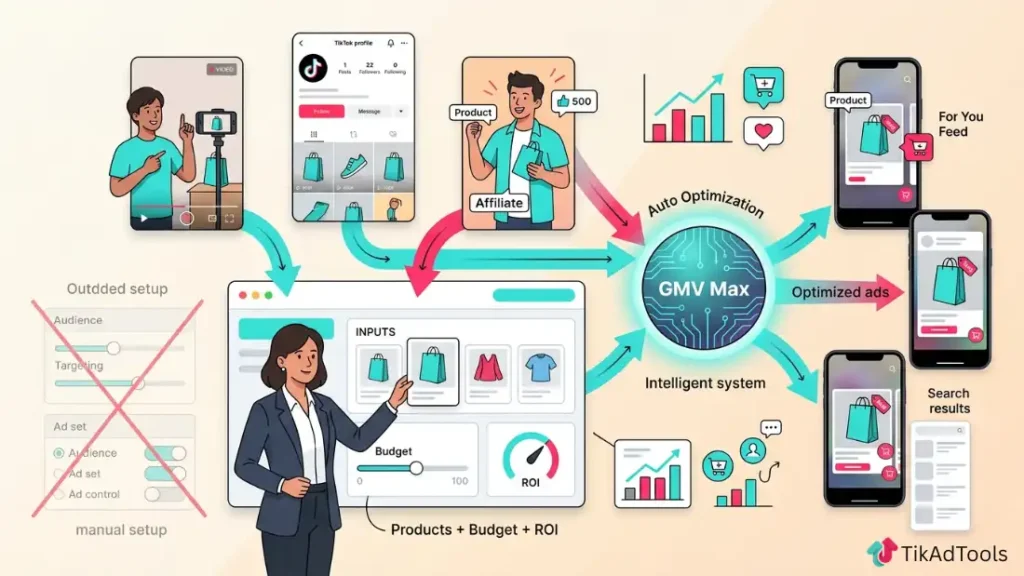
GMV Max operates very differently from what you may be used to on Meta or Google. You do not build ad sets, choose placements, or select audiences manually. Instead, you choose which products to promote, set a target ROI, and assign a daily budget. TikTok’s machine learning handles everything else.
The system pulls creative assets from three sources: your seller TikTok profile, your own organic posts, and your affiliate creators’ product-tagged videos. It tests combinations across all shoppable placements simultaneously, then allocates spend toward whatever is driving purchases most efficiently.
One detail that catches many sellers off guard: GMV Max also optimizes your organic delivery, not just paid ads. When a creator’s organic video featuring your product starts driving strong conversion signals, the system can boost that video’s reach without additional creative spend. We will explain exactly why this matters for your ROAS calculations later in this guide.
TikTok Video Shopping Ads vs. Other TikTok Shopping Ad Types
Knowing what GMV Max covers versus what it does not will prevent a lot of expensive confusion when building your overall TikTok strategy.
| Ad Type | Status in 2026 | Primary Goal | Manual Control |
| Product GMV Max | Active, default | Total channel ROI for product sales | Low, fully automated |
| LIVE GMV Max | Active | Drive viewers and purchases during livestreams | Low, fully automated |
| Video Shopping Ads | Discontinued July 2025 | Product sales via in-feed video | Was high, manual |
| Product Shopping Ads | Discontinued July 2025 | Product discovery via catalog | Was high, manual |
| TikTok Search Ads | Active, separate product | Keyword-based intent targeting | High, manual |
| Standard In-Feed Ads | Active | Traffic, awareness, and off-platform conversions | High, manual |
The most critical distinction for 2026: GMV Max is exclusively for TikTok Shop sellers. It requires a linked TikTok Shop and cannot send traffic to external URLs like your Shopify store directly.
If you sell on Shopify, Amazon, or any other platform without a TikTok Shop integration, your primary paid options are TikTok Search Ads or standard In-Feed Ads.
How to Set Up TikTok Video Shopping Ads Step by Step
GMV Max is technically simpler to launch than the old manual format. But getting the prerequisites right before you hit publish is what determines whether your campaign performs or stalls.
Prerequisites: TikTok Shop, Business Center, and Ads Manager
Before you can create a GMV Max campaign, you need four things confirmed:
- An active TikTok Shop. Your shop must be live with products listed and approved. Pending or restricted listings will not be eligible.
- A linked primary ad account. TikTok enforces a single primary Shop-linked ad account per shop. Verify this connection in your Seller Center settings before you attempt to create a campaign.
- Creative permissions granted. Your seller TikTok account, your brand’s organic TikTok profile, and any affiliated creator accounts need ad permissions enabled. Without this, GMV Max cannot pull their videos into the campaign.
- Integrated product inventory. Your SKUs, prices, and availability must feed correctly into your TikTok Shop catalog. Out-of-stock or incorrectly priced products create poor user experiences and hurt your account health score.
Creating a GMV Max Campaign in Seller Center or Ads Manager
You can create a Product GMV Max campaign through TikTok Seller Center or TikTok Ads Manager. Seller Center is the simpler path, and the one TikTok recommends for most sellers. Follow these steps:
1. Log in to Seller Center.
2. Under Marketing, click Shop Ads in the left navigation menu.
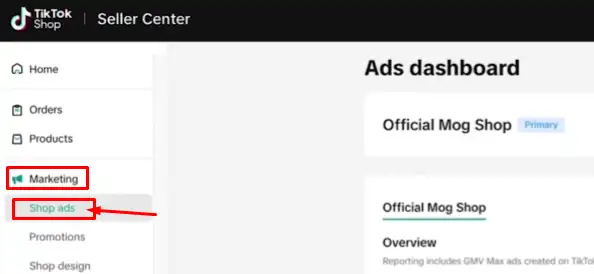
3. Select Create GMV Max ads.

4. Choose the products you want to promote, or enable Promote all products in TikTok Shop.
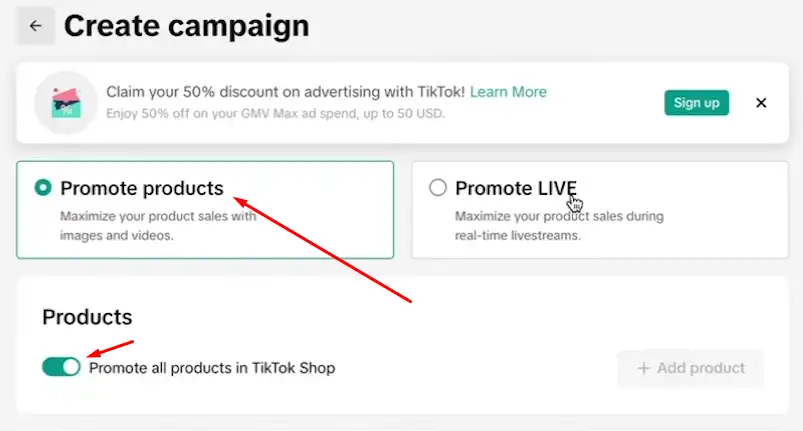
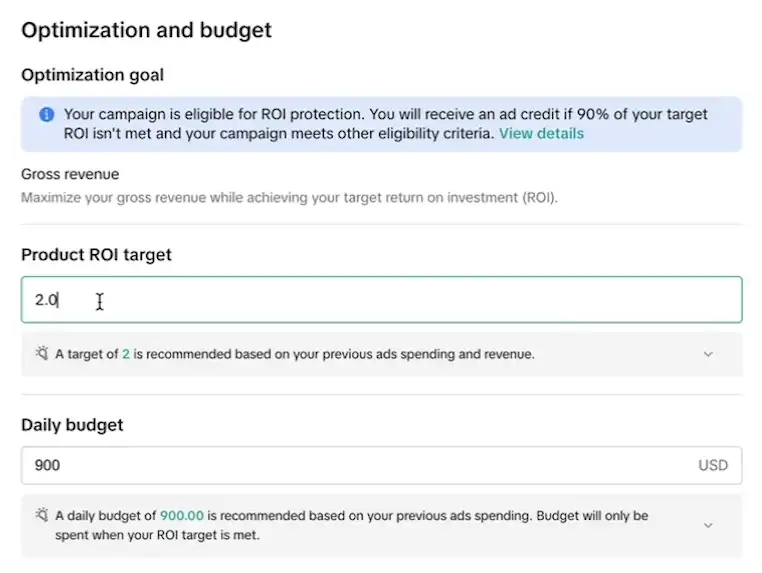
5. Set your ROI target and daily budget.
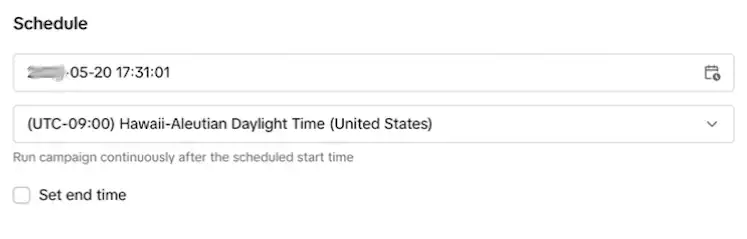
6. Schedule your campaign start time.
7. Click Publish.

Once live, your campaign begins pulling eligible creative assets and testing them across placements automatically. Monitor performance in the Overview tab inside Seller Center. TikTok’s video reporting section shows you which individual creatives are driving GMV, so you know what to produce more of.
Choosing Products, Setting Your ROI Target, and Configuring Budget
Product selection: According to TikTok’s official Seller University guidance, the strongest candidates for GMV Max are products with at least $1,500 in GMV over the past 7 days, or products with a high volume of shoppable content already in the TikTok ecosystem.
Launching cold-start products with no sales history and minimal creative into GMV Max consistently underperforms. Validate demand organically first, then add those products to your campaign.
ROI target: TikTok pre-fills a recommended ROI based on your shop’s previous sales data. Use that recommendation when starting a new campaign. Your target is expressed as a multiplier: an ROI of 5.0 means you want $5 in GMV for every $1 in ad spend, which equates to spending 20% of GMV on advertising. Start with TikTok’s suggestion and adjust gradually after reviewing your first 7 days of data.
Budget: For sellers using Max Delivery optimization mode, TikTok’s official Max Delivery documentation recommends setting your daily budget at a minimum of 10 times your average order value. For a $40 average order, that is $400 per day. For standard Target ROI mode, use the pre-filled budget recommendation in Seller Center, which is calculated based on your product’s historical performance. In either mode, avoid large budget jumps after launch. According to that same documentation, ramp up by no more than 30% each day to avoid disrupting campaign optimization.
One rule you should memorize: do not manually adjust your ROI target on the same day your campaign is active. Per TikTok’s ROI protection documentation, any manual ROI change made on a given day disqualifies that day from ROI protection coverage.
TikTok Video Shopping Ad Specs and Creative Requirements for 2026
Because GMV Max pulls from your existing creative assets, every organic post and affiliate video you want included must meet TikTok’s technical requirements.
Here are the current specifications for in-feed Video Shopping Ad creatives, confirmed by TikTok’s official Ads Manager documentation:
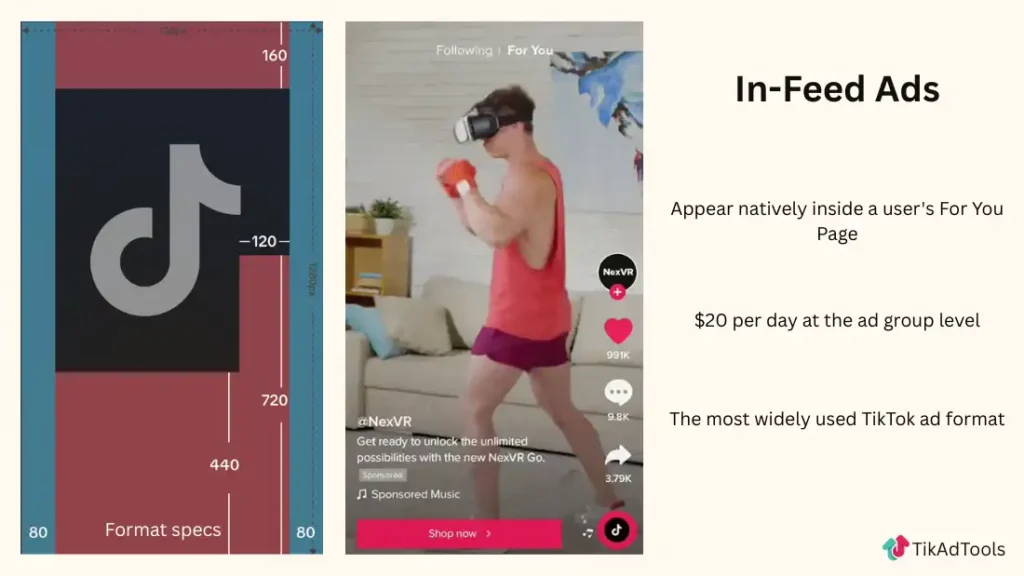
| Spec | Requirement |
| Aspect Ratio | 9:16 strongly recommended. 1:1 and 16:9 are supported, but with lower performance |
| Resolution | Minimum 540x960px. Recommended: 1080x1920px for best quality |
| Video Length | Up to 10 minutes for In-Feed placements. Performance sweet spot: 15 to 30 seconds |
| File Size | Maximum 500 MB |
| File Types | .mp4, .mov, .mpeg, .3gp, .avi |
| Caption Length | 12 to 100 characters. No emojis, curly braces, or hash symbols |
| Brand Name | 2 to 20 characters. No emojis |
| Audio | Required. Silent videos will underperform and may not pass review |
Three additional requirements to keep in mind:
- Safe zones. TikTok’s interface overlays the bottom and right of your video with profile icons, product card buttons, and navigation. Keep all key visuals and text within the top-center portion of the frame so nothing important gets covered.
- Product tags are required. For a video to be eligible for GMV Max, it must carry an active product tag linking directly to the correct TikTok Shop listing. A video without a product link will not enter the campaign pool.
- Commercial content labeling. Any organic or affiliate video that enters a GMV Max campaign receives a commercial content disclosure label automatically. In the EU and UK, this applies to all organic content included in campaigns, per TikTok’s official Product GMV Max documentation.
How to Create High-Converting Video Shopping Ad Creatives
Your creative library is the most important variable you control in GMV Max. The algorithm can only optimize with what you give it. Weak creative that does not stop the scroll cannot be fixed by budget or bidding adjustments.
Hook Structure, Product Tagging, and CTA Best Practices
The first 3 seconds determine whether a viewer stays or scrolls. Your hook needs to earn their attention before you show them what you are selling.
A structure that consistently performs well across TikTok shopping content:
- Hook (0 to 3 seconds): Lead with the result, the reaction, or the problem your product solves. A skincare brand showing a before-and-after in the first two seconds will outperform a brand opening with its logo every time.
- Product demonstration (3 to 20 seconds): Show the product in genuine use. Highlight one clear benefit per video. Add on-screen text to reinforce your key point for viewers watching without sound.
- CTA (final 3 to 5 seconds): Tell the viewer exactly what action to take. “Tap the product link below” performs better than generic phrases. Make sure your product card is visible when the CTA appears.
For product tagging: every video you want GMV Max to pull must have the correct product linked. Add product tags through the TikTok app when posting organically. Grant affiliate creators the ability to tag your products in their content by setting up affiliate permissions inside Seller Center.
Create high-converting hooks in seconds with our free hook generator.
How Many Creatives Do You Need, and When to Refresh Them?
Creative volume is the single most important factor in GMV Max performance, per TikTok’s Seller University guidance. Before launching a campaign, most practitioners recommend having at least 15 to 20 shoppable, product-linked videos per product available across your seller
A realistic refresh cadence to maintain:
- Add 5 to 10 new videos per week per active product, mixing seller content and affiliate UGC.
- Rotate across different hooks, formats, and creator styles. Variety matters more than volume alone.
- Review your creative performance reports inside Seller Center weekly. Pull videos showing persistent CTR decline and replace them with fresh assets to keep the algorithm testing new signals.
Targeting and Audience Strategy for TikTok Video Shopping Ads
This is where GMV Max differs most from every other paid social platform you have used.
You do not manually select audiences in GMV Max. There is no interest category selection, no demographic filtering, and no custom audience upload. TikTok’s algorithm handles all targeting decisions based on purchase signal data, your shop’s conversion history, and the content matching between your videos and user behavior patterns.
What you can influence is the quality of the signals you feed the system:
- Product selection signals: Products with proven sales history give the algorithm real conversion data to optimize from day one.
- Creative diversity signals: More variation in video style, creator voice, and hook format allows the system to test effectively across different audience segments.
- Shop health signals: Your Account Health Rating (AHR) and Shop Performance Score (SPS) directly affect how broadly your campaigns are distributed. Maintaining strong customer service metrics and product compliance keeps your scores high.
For LIVE GMV Max campaigns specifically, TikTok’s system focuses on driving qualified traffic into your livestream room. According to TikTok’s LIVE GMV Max best practices documentation, sessions of 3 hours or more generally produce faster single-session GMV growth. If you run LIVE GMV Max, aim for sessions of at least 3 hours and maintain consistent scheduling across campaign days.
How Much Do TikTok Video Shopping Ads Cost in 2026?
There is no single flat rate. Your costs will vary based on your industry, creative performance, ROI target, and the competitiveness of your product category. But you can plan around concrete benchmarks.
Platform minimum budgets:
- Campaign level: $50 per day
- Ad group level: $20 per day
These minimums are enforced by TikTok. Campaigns set below them will not run.
Auction-based cost benchmarks for 2026:
| Metric | Typical Range | U.S. Reference Point |
| CPM | $4 to $12 | $6.21 average in June 2025 (Gupta Media) |
| CPC | $0.17 to $1.00 | $0.35 to $1.00 typical for shopping formats |
| CPA | $15 to $80+ | Wide variance by industry and funnel efficiency |
| CTR | 0.5% to 1.5% | 0.61% global average (Lebesgue 2026) |
Key cost factors to understand:
- Creative quality is your biggest cost lever. TikTok’s algorithm rewards native-feeling, high-engagement content with lower CPMs. Spark Ads (boosted organic content) consistently deliver 30 to 40% lower CPMs than standard In-Feed formats because the content already carries social proof in the form of existing likes, comments, and shares.
- Seasonality creates major swings. Expect CPMs to rise significantly during Q4. January and February offer the lowest CPMs of the year, making them the best testing windows.
- Industry matters. Fashion and beauty typically see CPMs in the $5 to $8 range. Higher-ticket or finance-adjacent categories can reach $15 to $25, according to Benly.ai’s 2026 TikTok Ads cost benchmarks.
For a realistic GMV Max starting budget: if your average order value is $30 to $50, plan for $300 to $500 per day to give the system enough daily spend to generate conversion volume and optimize properly.
How to Measure and Optimize ROAS for TikTok Video Shopping Ads
Many brands running GMV Max for the first time see impressive ROAS numbers in their dashboards. Some of that is real. Some of it is an attribution artifact. Knowing the difference is essential to understanding whether your campaigns are actually profitable.
Why GMV Max Overstates ROAS, and How to Calculate Your True Return
Here is the core issue: GMV Max attributes all orders from products you promote to the campaign dashboard, including sales that came from organic content and affiliate videos, not just from paid ad clicks.
As TikTok’s official Product GMV Max documentation states directly: “All orders resulting from products you advertise will be attributed to Product GMV Max, including those from organic content and affiliate orders, in your GMV Max dashboard in Seller Center.” Previous Video Shopping Ads only counted GMV generated directly from paid ad interactions. GMV Max counts paid and organic together. We have seen sellers report 6x to 8x ROAS in their GMV Max dashboard while their actual paid-only return is closer to 2x to 3x.
To calculate your true incremental return, track two numbers separately:
- Total GMV attributed to GMV Max from the Seller Center for your campaign period.
- Your organic GMV baseline for those same products during the equivalent period before the campaign launched.
The difference between those two figures is the incremental lift your paid spend actually produced. That is the number that tells you whether the campaign is profitable.
Key Metrics to Track: Completion Rate, CTR, CPA, and GMV
Focus on these TikTok ad metrics in Seller Center and TikTok Ads Manager:
- Video completion rate: A rate above 25% means your creative holds attention past the hook. Below 15% signals your first three seconds need reworking before the video enters your GMV Max pool.
- CTR (click-through rate): Average TikTok CTR runs 0.5% to 1.5%. A shopping ad consistently above 1.5% CTR typically indicates a strong creative-to-product fit. Try our free TikTok CTR calculator.
- CPA (cost per acquisition): Your most direct profitability signal. If your CPA exceeds your product’s contribution margin, the campaign is losing money regardless of what the ROAS figure shows.
- Incremental GMV: The lift in product sales above your pre-campaign organic baseline. This is the single most honest measure of what your paid budget is actually generating.
One attribution detail worth bookmarking: GMV Max uses a 24-hour attribution window (same-day orders only), per TikTok’s official documentation. Standard TikTok Ads Manager uses a 7-day click and 1-day view window. If you compare performance across different reporting tools, confirm you are applying the same attribution model to all data. Mixed attribution windows produce incomparable numbers.
Common TikTok Video Shopping Ad Mistakes (and How to Fix Them)
We see the same patterns across underperforming GMV Max campaigns. Here are the most common mistakes and how to correct each one:
- Launching with too few creative assets. The algorithm needs substantial video variety to test effectively. Build your shoppable video library to at least 15 to 20 per product before you spend a dollar.
- Changing the ROI target too frequently. Each manual ROI adjustment on a given day removes that day from ROI protection coverage, per TikTok’s official documentation. Make changes no more than once every 3 to 5 days, and keep each adjustment moderate.
- Ignoring affiliate content. GMV Max draws from your entire affiliate ecosystem. Sellers with a strong pool of active affiliates posting product-linked content consistently outperform those relying solely on brand-owned videos.
- Selecting cold-start products. Products with no sales history and minimal creative will underdeliver in GMV Max. Test product-market fit through organic content first, then add proven products to your campaign.
- Comparing GMV Max ROAS directly to Meta or Google ROAS. Different attribution models generate different numbers. Build separate performance benchmarks for each platform.
- Neglecting account health. A low Account Health Rating or Shop Performance Score limits your campaign’s reach and delivery. Maintain strong customer service response times, accurate product descriptions, and clean return metrics to keep your shop scores strong.
Explore these helpful articles next:
👉 TikTok Custom Audiences: Data You Can and Can’t Use
👉 TikTok Dynamic Showcase Ads: eCommerce Personalization
👉 Collection Ads on TikTok: What They Are & How to Use
👉 TikTok Ads for Education & Online Courses
TikTok Video Shopping Ads: Frequently Asked Questions
What is the difference between TikTok GMV Max and Video Shopping Ads?
Video Shopping Ads were a manual campaign format where you configured your own targeting, bids, and placements inside TikTok Ads Manager. TikTok discontinued that format in July 2025 and replaced it with GMV Max. GMV Max is fully automated: you set a product selection, ROI target, and budget, and TikTok’s algorithm handles creative selection, audience matching, and placement decisions. If you are setting up TikTok shopping ads in 2026, GMV Max is the only available format for TikTok Shop sellers.
Do TikTok Video Shopping Ads work for small businesses?
Yes, but your results depend heavily on your creative setup and product traction. According to TikTok’s official Product GMV Max documentation, any product can be promoted via GMV Max regardless of its initial GMV scale. That said, products with existing organic traction and a substantial pool of product-tagged videos see significantly faster results. Daily budgets below $50 will prevent ads from running at all, as that is the enforced platform minimum at the campaign level.
How long does it take for TikTok Shopping Ads to work?
GMV Max needs consistent data to complete its initial optimization phase. When using Max Delivery optimization mode, TikTok’s official Max Delivery documentation recommends running for 5 to 7 days before evaluating results. During that window, avoid changing your ROI target, budget, or product selection. Campaigns that get altered repeatedly in the first week rarely reach their performance potential.
Can you run TikTok Shopping Ads without a TikTok Shop?
No. GMV Max, the only available format for shopping ads in 2026, requires an active TikTok Shop linked to your ad account. If you sell exclusively on Shopify, WooCommerce, or Amazon without a TikTok Shop integration, you cannot use GMV Max. Your alternatives are standard In-Feed Ads or TikTok Search Ads, both of which support external destination URLs and do not require a TikTok Shop.
What is ROI protection on TikTok GMV Max campaigns?
ROI protection is a built-in safety feature available for GMV Max campaigns starting February 25, 2026. If your campaign’s daily ROI falls below 90% of your set target, and your campaign generated more than 20 orders on that day, TikTok automatically issues ad credits to offset the shortfall. To stay eligible, you must not manually adjust your ROI target, pause the campaign, or edit campaign products on any day you want protection to apply. You can check your campaign’s eligibility status in the ROI protection column of your Ads Manager campaign list, per TikTok’s ROI protection documentation.
How many videos do you need to run TikTok Video Shopping Ads?
There is no hard minimum enforced by the platform. However, TikTok consistently emphasizes that creative volume is the most critical factor for GMV Max success. Products with a high volume of both organic and paid content are considered the strongest candidates, per TikTok’s Seller University guidance. Most practitioners recommend having at least 15 to 20 product-tagged videos per product before launching. For LIVE GMV Max campaigns, TikTok’s own documentation recommends 50 to 70 videos available for creative exploration per session. The more creative diversity you provide, the better the algorithm can identify and scale what converts.
Conclusion
TikTok Video Shopping Ads in 2026 look nothing like what many sellers learned when they first started on the platform. The manual campaign architecture is gone. The new system runs on GMV Max, an automated format that treats your entire TikTok Shop ecosystem as a single optimization problem, including your organic content and your affiliate network, not just the ads you pay for.
That shift means creative volume and product selection are now the primary levers you control. The brands producing steady results are the ones feeding the algorithm consistent, fresh, product-tagged content from both their own accounts and a growing pool of affiliate creators.
They are also reading their ROAS numbers carefully, understanding that GMV Max’s dashboard attribution includes organic GMV, and benchmarking performance against their pre-campaign baseline instead.
The cost structure is real and manageable. The ROI protection feature reduces budget risk in a measurable way. The setup process is genuinely simpler than what came before. But none of those advantages work if you skip the fundamentals: an active TikTok Shop, the right product selection, and enough creative to give the system something to learn from.
Build those foundations correctly, and TikTok Video Shopping Ads offer a scalable, increasingly measurable path to ecommerce growth that few paid social channels can match right now.