
Travel marketing used to be about showing a perfect, polished photo of a white sandy beach. In 2026, that image is invisible. Travelers today are not looking for postcards. They are looking for proof.
They want to see the exact street food stall in Bangkok, hear the noise of the Tokyo subway, and know specifically which train pass saves them money in Switzerland.
TikTok has evolved into the world’s most powerful travel agent because it offers this raw, verifiable “try before you buy” experience.
Get Up to $6,000 in Free TikTok Ad Credits
TikTok offers ad credit incentives for new advertisers, helping you test campaigns with a lower upfront cost.
For tourism boards, airlines, and hotel chains, the opportunity is massive. TikTok users are no longer just dreaming on the app; they are planning.
Travel Search volume on TikTok has rivaled Google for Gen Z and Millennials, creating a new funnel where discovery and booking happen in the same session.
This guide outlines the specific ad strategies, creative frameworks, and targeting layers needed to move users from saving a video to booking a flight.
Table of Contents
Quick Summary
- The Search Pivot: Users use TikTok to find specific itineraries (e.g., 3 days in Rome). Target these keywords to capture high-intent planners, not just random scrollers.
- The Dupe Trend: If your destination is affordable, market it as a Destination Dupe (e.g., The Maldives of Europe). This is one of the highest-converting angles in travel.
- Local Creators > Mega Influencers: A local guide showing a secret spot builds more trust than a famous influencer in a luxury resort. Authenticity drives bookings.
- The 3-Video Funnel: You need three ad types: Inspiration (The Vibe), Education (The Logistics/Cost), and Urgency (The Deal).
- Soundscapes Matter: Use the real sounds of the location (waves, bustling markets) rather than trending pop music. Immersive audio triggers the emotional desire to escape.
1. The Search Engine Strategy for Travel
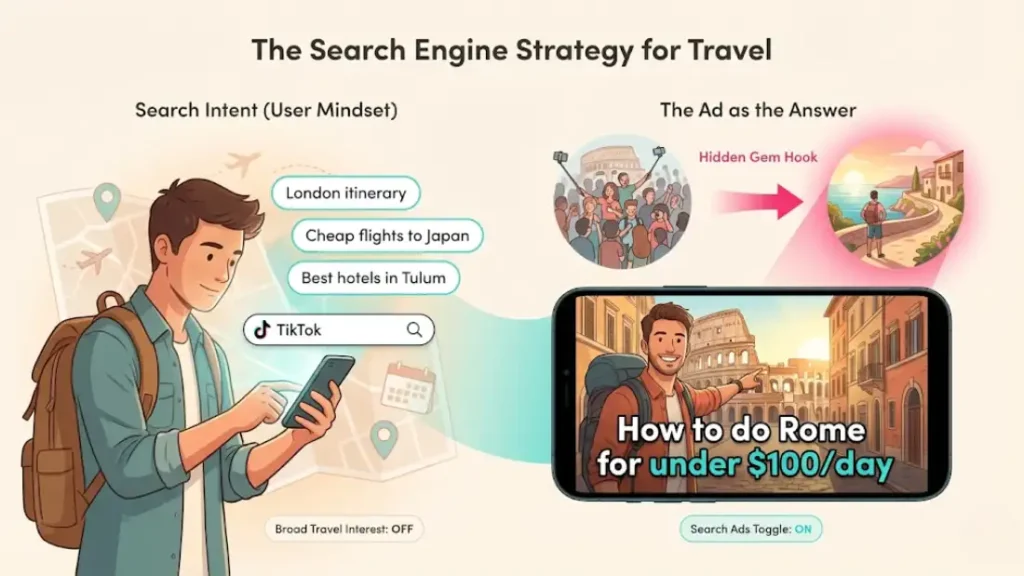
Travelers on TikTok are not passive. They are actively searching for answers. Your ads must appear as the solution to their specific questions.
Targeting Itinerary Keywords
Broad interest targeting (e.g., Travel) is often too expensive and vague. Instead, use Search Ads Toggle.
The Tactic: Target users searching for specific planning terms like London itinerary, Cheap flights to Japan, or Best hotels in Tulum.
The Creative Match: Ensure your video title matches the search query. If they search Rome on a budget, your text overlay should read How to do Rome for under $100/day.
The Hidden Gem Hook
The most viral travel content promises exclusivity.
The Hook: Stop going to [Crowded Tourist Spot]. Go here instead.
Why it Works: It validates the user’s desire to be a traveler, not a tourist. It frames your destination as a savvy, insider choice.
2. Creative Frameworks: Vibe vs. Logistics
Travel ads fail when they try to do too much. You must separate Vibe ads from Logistics ads.
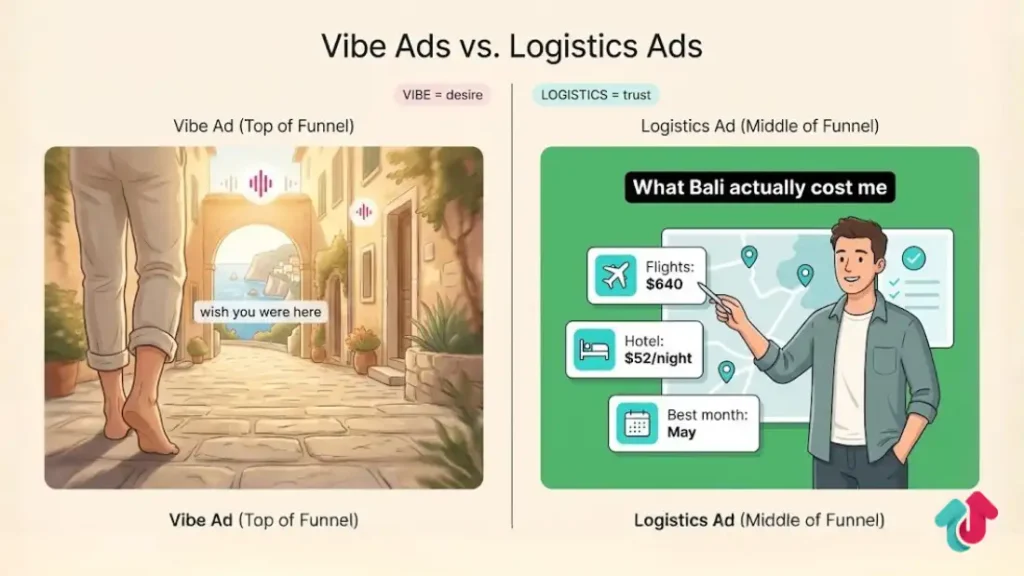
The Vibe Ad (Top of Funnel)
This creates the emotional need to go.
Visuals: POV shots of walking through a beautiful street, jumping into clear water, or opening a hotel room door to a view.
Audio: Ambient sounds (ASMR). The sound of cicadas in Provence or rain in a rainforest.
Text: Minimal. Let the location speak.
The Logistics Ad (Middle of Funnel)
Once they want to go, they need to know how.
Visuals: A Green Screen video with a creator pointing at a map or a screenshot of a flight deal.
Script: Here is the exact breakdown of what I spent in Bali.
Value: Break down costs, flight times, or best months to visit. This builds the trust required for a high-ticket transaction.
3. Leveraging the Destination Dupe Economy
One of the most profitable strategies in 2026 is positioning your destination as an alternative to a more expensive or crowded spot.
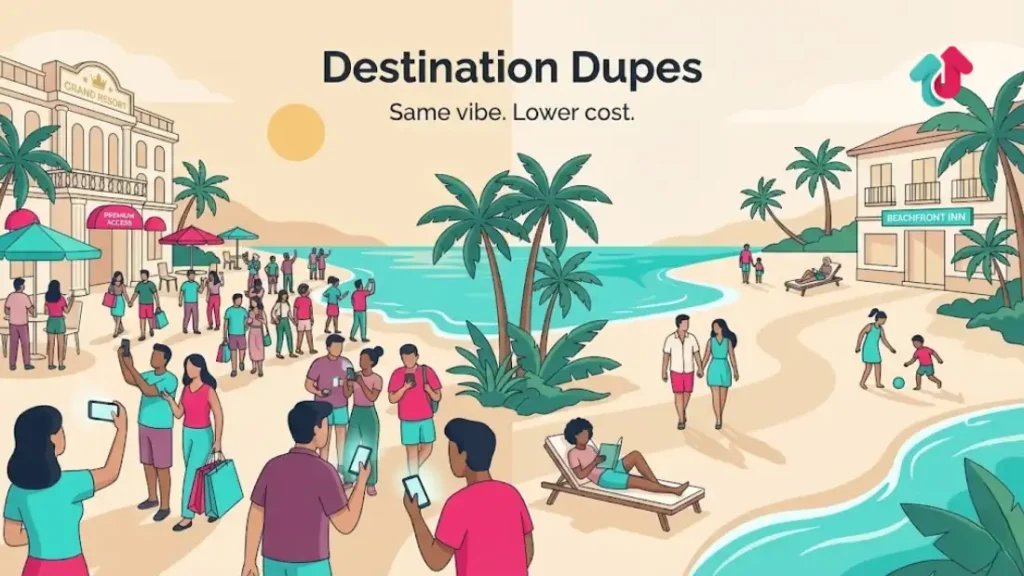
The Strategy:
Albania positioned itself as the Maldives of Europe.
Taipei can be the Affordable Tokyo.
Liverpool can be the Budget London.
The Ad Structure:
Split Screen: Show the expensive destination on top and your destination on the bottom.
Text: Same water, 1/4 the price.
Result: This captures the audience who wants the luxury aesthetic but has a budget constraint.
4. Influencer Strategy: Locals Over Tourists
A tourist influencer shows what everyone sees. A local creator shows what nobody sees.
The Local Guide Approach: Hire creators who actually live in the destination.
The Angle: I’ve lived in NYC for 10 years, and I never eat in Times Square. Here is where the locals actually go.
Trust Signal: Locals are perceived as having no incentive to lie, whereas travel influencers are often seen as paid to say it’s nice.
Format: Use Spark Ads to boost the local creator’s organic post. This looks like a genuine recommendation rather than a tourism board commercial.
5. Driving Bookings: The Urgency Bridge
Travel has a long consideration phase. Users might look for months before booking. You must force a decision.
The Flash Sale Countdown:
Creative: A screen recording of a flight search engine showing a low price drop.
Text: Flights to Paris just dropped to $400 for October dates.
CTA: Link in bio to check dates.
Why it Works: It triggers Loss Aversion. The user fears missing the specific deal window.
Explore these helpful articles next:
👉 TikTok Video Editing Tips for Better Ad Results
👉 TikTok Dynamic Showcase Ads: eCommerce Personalization
👉 TikTok Ad Scheduling: Best Times to Show Ads
👉 Organic Content to Paid: Transitioning TikTok Posts to Ads
FAQ: Travel & Tourism Ads on TikTok
Is TikTok good for travel?
Yes. TikTok is arguably the most effective platform for travel discovery in 2026. The algorithm favors visual storytelling, which aligns perfectly with destination marketing. Unlike Instagram, which is often about flexing past trips, TikTok is used heavily for planning future trips using search and saved collections.
How does TikTok affect tourism?
TikTok drives the Viral Destination effect. A single viral video can transform a quiet town into a tourism hotspot overnight (e.g., the Amalfi Coast effect). For brands, this means you can generate massive interest for lesser-known regions by highlighting unique, visually distinct attributes that appeal to the discovery mindset.
How to make good travel tiktoks?
Good travel TikToks focus on POV (Point of View) experiences. Hold the camera at eye level as if the viewer is walking there. Focus on sensory details (food steaming, waves crashing) and provide actionable utility (exact locations, prices, and tips) rather than just pretty montages.
What is the 3 second rule in TikTok?
The 3-second rule states you must hook the viewer immediately. For travel, this means starting with the most stunning view or a controversial statement (e.g., Don’t go to Paris until you watch this). Do not waste time with slow intros or logos; drop the viewer straight into the experience.
What are the best travel hashtags for TikTok?
Use a mix of broad and niche tags.
Broad: #TravelTok, #HiddenGems, #TravelHacks, #SoloTravel.
Niche: #[City]Eats, #[Country]Travel, #BudgetTravel, #DigitalNomad.
Brand Specific: Create a unique challenge tag (e.g., #My[Brand]Journey) to aggregate user content.
What is the best time to post on TikTok?
For travel content, posting during evenings (7 PM – 10 PM) and weekends is most effective. This is when users are off work, dreaming of escapism, and have the time to research potential vacations. Sunday evenings are particularly strong for planning content.
Conclusion
TikTok has moved travel marketing from aspiration to action.
The brands winning in this space are not the ones with the glossiest drone shots. They are the ones who answer the traveler’s questions, validate the costs, and provide the local perspective that builds confidence.
By using Search Ads to capture intent and Spark Ads to leverage authentic creator voices, you can turn your destination into the next viral itinerary.
Next Step: Search your destination’s name on TikTok right now. Find the top 3 complaints or questions in the comments of viral videos.
Film a response video addressing those specific pain points (e.g., Yes, Venice is crowded, but not if you visit this neighborhood) and run it as a targeted ad.