
Most eCommerce brands close their Q4 books and mentally move on once the holiday rush ends.
Shipping cutoffs have passed, the gift-giving frenzy is over, and marketing teams are exhausted. The natural operational instinct is to pause ad spend, slow campaigns, and reset plans for February.
This is a massive financial error.
Get Up to $6,000 in Free TikTok Ad Credits
TikTok offers ad credit incentives for new advertisers, helping you test campaigns with a lower upfront cost.
What many brands overlook is that the period immediately after Christmas operates as an unofficial extension of Q4, often referred to as Q5, roughly spanning December 26 through mid-January. Historically, this window generates some of the most efficient revenue of the entire year.
While topline revenue may be lower than Black Friday or Cyber Monday, profitability in terms of net margin is often significantly higher.
Here we, analyzes the eCommerce revenue mechanics of the New Year Sale window.
We look beyond surface-level ROAS and break down the economic factors, ad auction dynamics, gift card-driven AOV lift, and Smart+ efficiency that make this short period a critical revenue engine heading into 2026.
Table of Contents
Quick Summary
- The Auction Vacuum: With major retailers pulling budget post-Christmas, CPMs (Cost Per Mille) in early January are projected to drop 30-50%, drastically lowering Customer Acquisition Costs (CPA).
- The Gift Card Multiplier: Shoppers using gift cards spend, on average, $81 more than the card’s value. This artificially inflates Average Order Value (AOV) during the first week of January.
- Smart+ Efficiency: Data from late 2025 shows that TikTok’s AI-driven Smart+ campaigns can reduce CPA by up to 36% for catalog-based advertisers.
- The Resolution LTV: Customers acquired in January for habit products (supplements, planners) have a 20% higher Lifetime Value (LTV) than those acquired in Q4.
1. The Q5 Revenue Arbitrage (Supply vs. Demand)
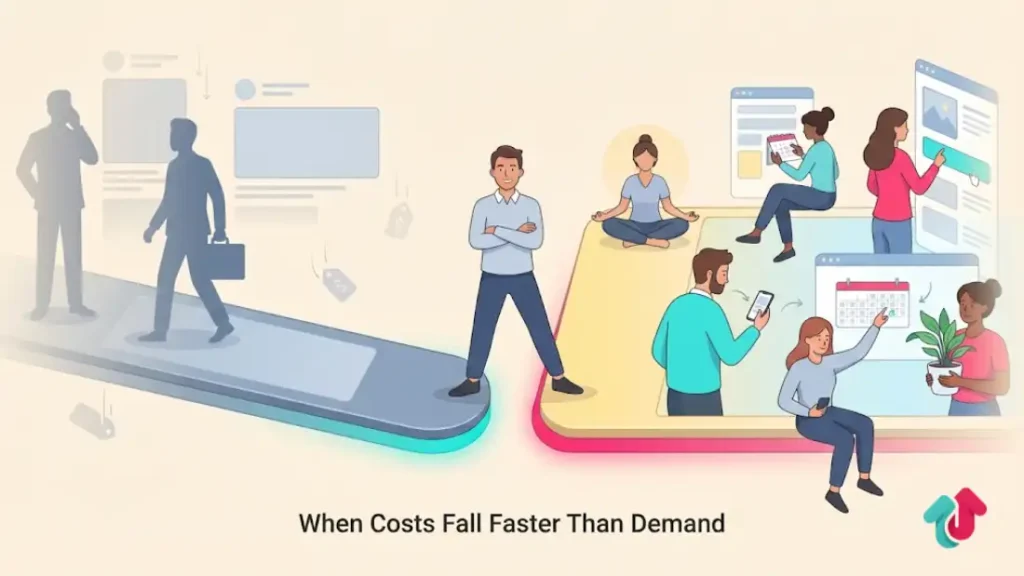
In standard economics, when demand drops (post-Christmas), prices should drop. However, on TikTok, the price of traffic drops faster than consumer demand, creating a profit gap.
The Cost Side (CPM)
On December 26th, big-box advertisers (Walmart, Target, Amazon) reduced their spend by an estimated 60-70% because they could no longer ship gifts in time for the 25th. This removal of liquidity from the auction causes a freefall in ad prices.
- Dec 15 CPM: $14.00
- Jan 5 CPM (Projected): $6.00
- Impact: Your ad budget buys 2.3x more impressions today than it did two weeks ago.
The Revenue Side (Intent)
Contrary to the spending hangover myth, user activity on TikTok actually increases in Q5.
- Device Activation: Millions of users are setting up new phones installed with TikTok.
- Engagement: 75% of users plan to shop the same or more in January as they did in December.
This divergence, crashing costs vs. sustained intent, is the Q5 Arbitrage. It allows you to maintain aggressive New Year Sale offers (20-30% off) while still protecting your net margin.
2. Analyzing the Gift Card Lift on AOV
One of the most overlooked revenue drivers in January is the psychological effect of free money.
Consumers entering the New Year often hold Amazon gift cards, Visa prepaid cards, or cash gifts. This changes their price sensitivity.
- The Up-Spend Metric: Industry data suggests that consumers using gift cards spend an average of $81 over the original value of the card.
- The Bundle Strategy: Because users feel they are playing with house money, they are more likely to buy high-ticket bundles than single items.
- Revenue Action: Do not advertise a $20 product in early January. Advertise a $100 bundle. The user applies their $50 gift card and pays you $50. To them, it feels like a deal; to you, it is a high-AOV conversion.
3. The Resolution Cohort: LTV Analysis
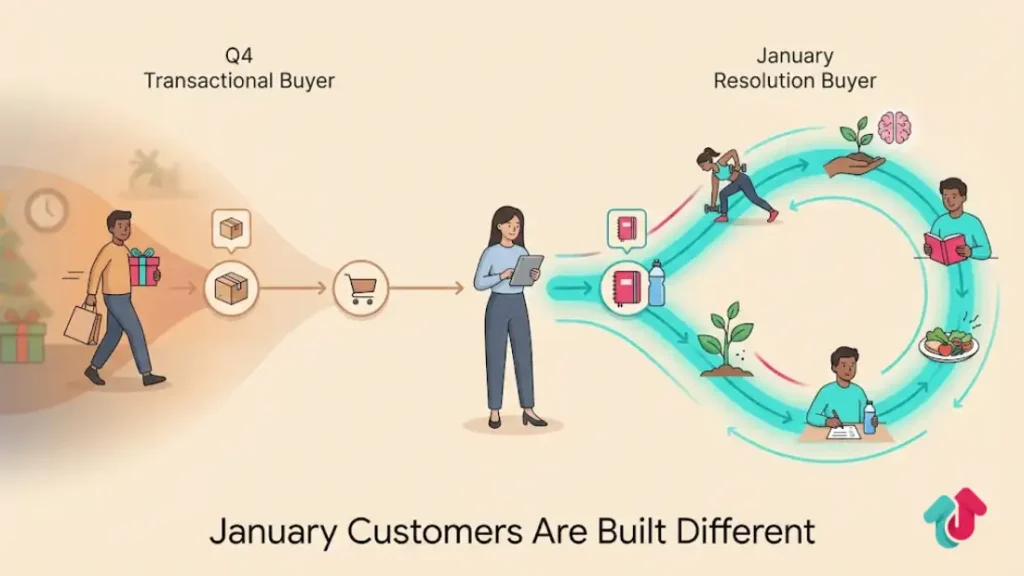
Not all revenue is created equal. A customer acquired on January 3rd is often worth more than a customer acquired on November 28th (Black Friday).
The Habit Factor
In Q4, people buy for others. These transactions are transactional and rarely lead to recurring revenue.
In January, people buy for themselves. They are investing in a New Year’s Resolution (Weight Loss, Productivity, Skincare).
- Retention Rate: Cohort analysis shows that customers who buy Routine products in January have a 15-20% higher retention rate over 6 months compared to Q4 buyers.
- LTV Implications: If you sell consumables (supplements, skincare) or subscriptions (apps), you can afford to bid higher in January because the Payback Period is faster.
4. The Smart+ Efficiency Factor
For 2026, the biggest technical lever for revenue is TikTok’s Smart+ automation.
Beta tests from late 2025 indicate a massive shift in efficiency for eCommerce brands using Smart+ Catalog Ads compared to manual setups.
| Metric | Manual Campaign | Smart+ Campaign | Improvement |
| CPA (Cost Per Acquisition) | $28.50 | $18.24 | -36% |
| ROAS (Return on Ad Spend) | 2.1x | 3.3x | +57% |
| Conversion Rate | 1.8% | 2.4% | +33% |
Why: Smart+ automates the New Year pivot. It instantly detects that a user who watched Gaming videos in December is now watching Gym videos in January, and serves them your fitness ad immediately. Manual targeting is too slow to catch this behavioral shift.
5. Category Forecast: Who Wins in January?
Revenue potential in January is unevenly distributed. Based on Q5 2025 trend lines, here is where the money is flowing:
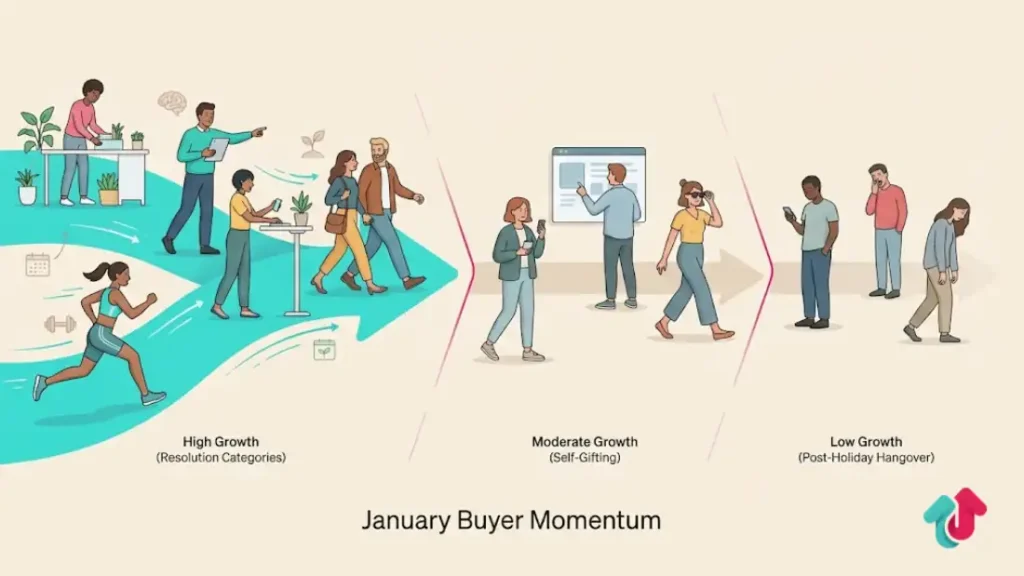
- High Growth (Resolution Sector): Health & Wellness, EdTech (Language/Finance apps), Organization (Storage). Expect ROAS > 4.0.
- Moderate Growth (Self-Gifting): Fashion, Beauty, Tech Gadgets. Expect ROAS 2.5 – 3.0 (driven by Gift Card spending).
- Low Growth (Hangover Sector): Toys, Home Decor, Luxury Gifting. Expect ROAS < 1.5.
Explore these helpful articles next:
👉 TikTok Ads Optimization Checklist
👉 TikTok Ads Cost Breakdown for New Year Sale Campaigns
👉 When to Start TikTok Ads for New Year Sale Campaigns
👉 TikTok Ads Budget Planning for New Year Sale (SMEs & Brands)
FAQ: New Year Revenue Analysis
Does January traffic convert as well as Q4?
Slightly lower conversion rate, but significantly lower cost. While conversion rates might drop from 3% (Q4) to 2.2% (Jan), the cost to get that traffic drops by 50%. The math works out to a higher overall profit.
Should I lower my ad spend in January?
No. You should front-load it. Allocate 70% of your January budget to the first 10 days (Dec 26 – Jan 5). The efficiency window closes quickly once major brands return to work in mid-January.
How do I track Gift Card purchases?
You can’t track which payment method a user uses inside TikTok Ads Manager. However, you can monitor AOV spikes in your Shopify/WooCommerce analytics. If AOV jumps in the first week of Jan, it is a signal to push higher-ticket bundles in your ads.
Is Smart+ risky for brand safety?
TikTok has improved brand safety controls within Smart+. However, for pure performance revenue, the risk is minimal. The algorithm prioritizes users likely to buy, not controversial content.
What is the best creative angle for revenue?
Financial Justification. Instead of just New Year, New Me, use hooks like The best way to spend your Christmas cash or Don’t let your gift cards go to waste. This directly taps into the Q5 spending psychology.
Conclusion
The New Year Sale is not just a clearance event; it is a revenue arbitrage opportunity.
By capitalizing on the 30-50% drop in CPMs, targeting the Gift Card economy with high-AOV bundles, and leveraging Smart+ to reduce operational costs, you can drive your most profitable revenue of the year before 2026 even hits its stride.
Next Step: Check your Shopify analytics for the last 5 days. If your AOV is trending up, immediately launch a Bundle ad set on TikTok targeting Broad Audiences to capture the Gift Card wave before it ends on January 7th.